Showing posts with label INTERIOR LIGHTING DESIGN BLOG. Show all posts

Monday, December 12, 2011

Thursday, October 20, 2011

Thursday, October 13, 2011

sketch series 4

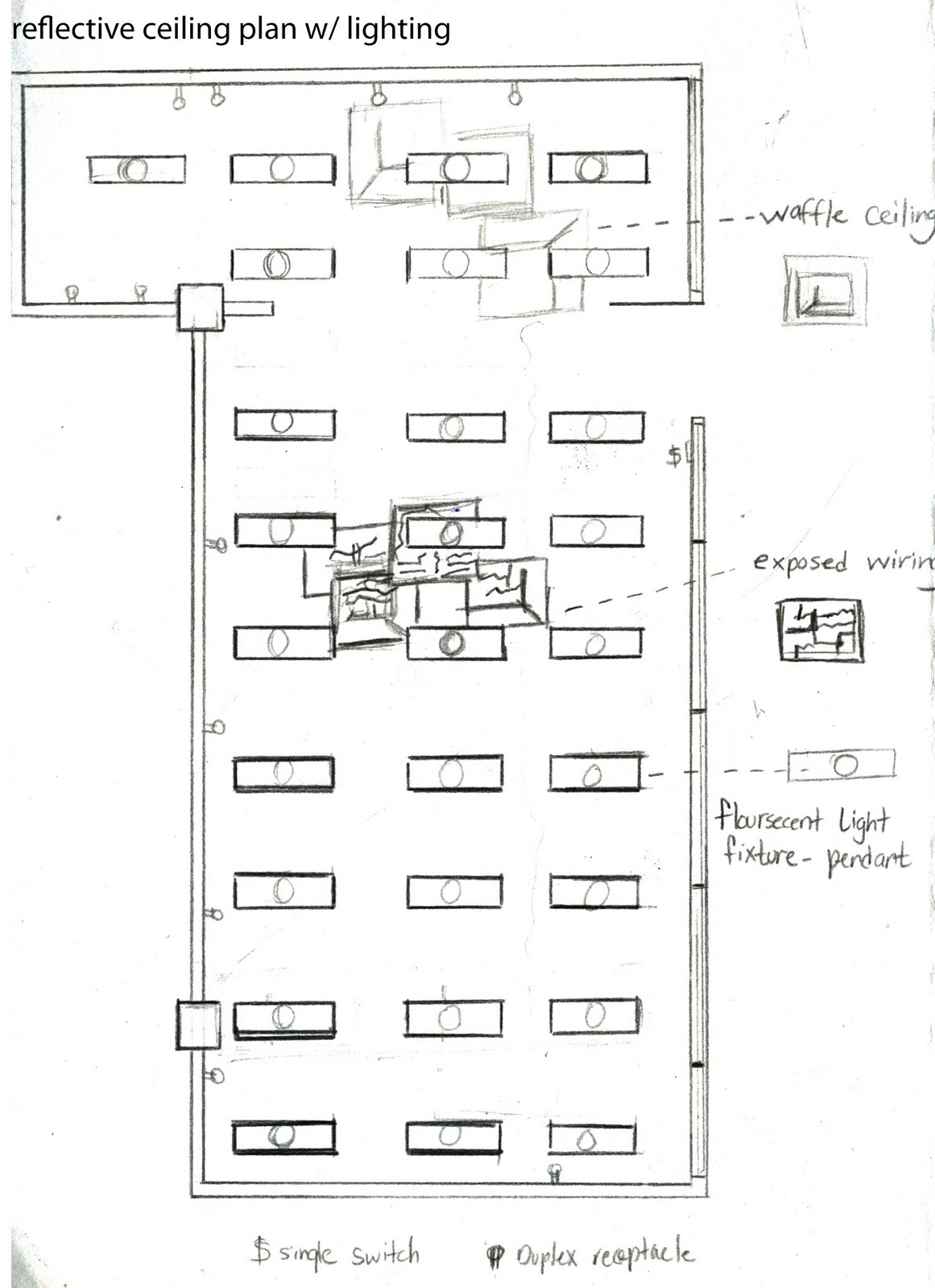
computer lab

a. The space's function is a computer lab.

b. The purpose of the lamps are for aiding in tasks. They illuminate the workspace.

c. Task lighting is located overhead. Additional lighting emits from the computer screens. Also, desk lamps are provided but are rarely used because the overhead lighting provides ample light.

d. No recommendations. I have always felt there is an adequate and appropriate amount of light for computer driven tasks.

a. direct/indirect


b. ceiling/suspended

c. fluorescent

d. extruded aluminum

e. fixture= litecontrol le-90

lamp= sylvania

f. direct/indirect, 32w, 2 lamps in each illuminaire

g. aluminum and brushed nickel

h. none

i. fixed

j. non-dimming, instant start, internal to illuminaire

k. dry

l. baffles

Jimmy John's


a. Jimmy Johns is a restaurant where food preparation and dining takes place.

b. Most of the lighting within Jimmy John's was geared towards task lighting. Accent lighting was also seen along the ceiling, being focused onto walls. Hanging pendants over dining tables acted as both task lighting and ambient lighting.

c. In the kitchen and prep room, ceiling installed fluorescents provided an ample amount of lighting for tasks. Recessed can lighting can be seen directly above the countertop, illuminating the counter and service area. Track lighting helped cast light onto the surrounding walls, and pendant lights provided a nice diffuse glow over the dining tables.

d. Overall, Jimmy Johns was successful in using a variety of lamps to acquire the appropriate amount of light within the establishment. My only recommendation would possibly be to provide more light to wash over the wall, to further illuminate the space and accentuate the art work hanging on the walls.

a. direct/downlighting


b. ceiling/pendant suspending

c. compact fluorescent bulb


d. light fixture= extruded aluminum


e. light fixture= uncertain but close to Mulinello


bulb= bulbrama


f. each fixture contained 1 bulb, 40 watt, 2750 lumens


g. glass, red glazing


h. glass


i. fixed


j. instant start, internal to illuminaire


k. dry


l. none


Leon's Hair Salon
a. Leon's is a hair salon.

b. The two types of lighting within the space are task lighting and ambient lighting.

c. MR-16/task lighting is suspended from overhead. Additionally, there is cove lighting located along the perimeter of the ceiling that provides general illuminance and an ambient glow.

d. The space seemed a little dim for what I expected a hair salon would be. There was overall a good amount of general lighting in the space, but more overhead task lighting would help provide more light to the hairdressers who are focusing on cutting hair.

a. direct

b. suspended

c. mr-16/halogen

d. mirrored reflector

e. GE lighting

f. CBCP 525 lumens, 20 watt, 12 volt

g. metal and acrylic

h. acrylic

i. adjustable

j. non-dimming, instant start, internal ballast

k. dry

l. none

Wednesday, September 28, 2011

light sketch series 2


Fabrics 3 & 4


A. The first fixture chosen was an LED lamp we had on hand. Originally labeled for under cabinet lighting, we chose to use this for our experiment in the same living room listed below. The lamp is manufactured by Shenzhen Hexinyu Tech. Co., Ltd and is labeled as HXY-120V1000A. It houses a total of 9 small LED lamps, in rows of three.

The second fixture chosen was from a ceiling fan, which uses four Sylvania incandescent bulbs -120V/25W. This ceiling fan is located in a living room with cream-colored walls, white trim, a dark red microfiber couch and wood floors and accent furniture. There are three windows that bring in natural light from South and Eastern directions, although the pictures were taken in the evening.


Part II
• record the change in color of the fabric samples by taking photographs and your subjective reactions to the appearance of colors in the different settings. Don’t use flash!

Fabric 1:
a wheat colored microfiber that can be used for covering furniture. Placing this fabric on different colored backgrounds really showed a variation in the lighting effects. First, we placed it on a wooden table directly under the ceiling fan. It took on a very warm, almost reddish tone – really picking up the reds from the table. Next, we placed the same fabric sample on a white glossy painted surface and the color appeared almost brown, hints of red but with light sage color with hints of gray.

Next, we held up the LED light next to the microfiber fabric on both surfaces. We definitely noticed how the light traveled across the fabric differently between the two light sources and surfaces.
This LED gave a accent light effect that is usually used to show importance and have something be noticed. The wrinkles in the fabric were definitely more noticeable and the fabric color, on the wooden surface, looked very greenish but washed out - almost unrecognizable from the other light source. On the white surface, the LED took on less of an accent effect and the color gradient along the fabric was less noticeable. The fabric took on a brown/canvas color and not as washed out as previously viewed.

Fabric 2:
cream-colored sheer lace-curtain panel with green, yellow, red and peach/pink colored flowers woven through it. Putting this fabric on the wooden surface, the color from the wood really made a difference in how the fabric took the light. It created a very warm, reddish color – picking up a lot of red from the wood table. The colors of the flowers appeared completely different in color and it was hard to really distinguish the various flower colors. There was absolutely no glare from the light at all onto the fabric.

When placing this lace panel onto the white surface with the LED light, we immediately noticed the glare from the light. Colors were more distinguishable in the fabric, however the light really seemed to be more intense in a certain spot and really fad off quickly across the edges. There was an overall greenish tone to the fabric with the LED lamp too.

• do you notice any aspect of Flynn’s subjective impressions?

Absolutely. The ceiling fan lamps (Sylvania incandescent 120v/25W), these are a warmer light, which would be deemed appropriate since Flynn states that, “a warm atmosphere suggests
friendliness or coziness..” this is exactly the type of atmosphere that one would generally want to create in their living room. The impression left on us from the LED lighting tones, gave us a slight uneasy feeling and was not calming.

• based upon your observations and reflections, provide recommendations for improving the lighting environment.
There is definitely a need for more various lighting fixtures in the living room studied. There is currently one other fixture in this room with a now standard fluorescent lamp giving off the equivalent of 60Watts, it leaves parts of the room darker than others. The overhead ceiling fan is usually not used for lighting because it gives off a bit of glare when trying to watch television or reading. Additional fluorescent lamp fixtures on opposite sides of the room would offer a more even, pleasing glow for gatherings or reading.
The LED fixture is not used by either group members for anything other than lighting for studio projects, however using them as under counter lighting may be successful if there were more than one lighting a counter. There is a port to attach another fixture to this one, which would create a total of 18 small LED lamps shining down on a counter, and that would be successful counter lighting provided that the counter was not an ultra shiny material or a polished granite which could create more glare than desired. Overhead lighting would also give a more accurate account of food colors when prepping meals.

Monday, August 29, 2011

LIGHT and [Mrs. Williams]

Light and Place:
Overjoyed with the new idea of owning a home in New Zealand and over zealous with the notion of decorating it; Mrs. Williams failed at giving consideration to any other details. She left what she termed “the build” to the architect, engineers, contractors, and designer. Soon after, she discovered that spending her time selecting furniture and fabric was a bit immature and that she should’ve collaborated with “the build” team more frequently. Mrs. Williams later learned that those golden rays in Blenheim, New Zealand, were far more than she’d bargained for. She only knew that this city was less sunny than the US. The house of her dreams happened to be built on New Zealand’s sunniest island with curtain wall windows shelling most of the 1st floor. Furniture and fabric became faded and damaged by the long sunny days. Mrs. Williams immediately researched the natural light of the land and made provisions to her home; while careful not to disengage the views of her natural surroundings.

Light and Nature:
It was virtually impossible not to long for a permanent view inside the home of the mountainous and lush region she’d relocated to. One where the outside could be experienced inside with all the shelter a roof provides. Since the house was built near the coast line the designer was intentional in encapsulating the breathtaking views of the water with the placement of the windows. Mrs. Williams is delighted with waking daily in a home where she could realize the power of natural light combined with the glistening effects from the movement of the water; which releases a unique dance on the interior walls, floors, and ceiling upon every opportunity.

Light and Climate
Mrs. Williams will be embarking on her 1st winter [June, July and August] soon and it is now time to consider the interaction between the inside and the outside. Since the average low is roughly 45° F, she is hoping for the greenhouse effect. Fully cognizant that the glass in the windows would admit the heat along with the sunlight and trap it; she took little action on extra padding for the winter months, as she was previously accustomed to doing so in Colorado. But what kind of psychological effects would the water have on a cold winter day? The visual effects of light in the winter can add a certain level of “brightness” to the day; however, Mrs. Williams is also faced with the psychological effects of the water being in close sight. It is a proven fact that water has a cooling effect on the body, which can be considered desirable in the summer months and perhaps less so during the winter. The motorized shades, installed during her initial provisions will have to be used at her discretion for moments of releasing the heat or capturing it; as well as the costal view!

Light and Time:
Embarking upon the winter has its special considerations as will be true for all the other seasons. Although New Zealand’s weather does not have a huge range it is common to change abruptly due to cold fronts and tropical cyclones. This creates challenges for outdoor activities while inside the home the use of natural light and electrical lighting becomes a necessary assessment. Or how much of each to use is considered and thought of more. Also, with the change of each season, shadows fall in different places during different times of the day, and colors take on new hues from sunrise to sunset. Since pollution is little to none UV rays in the sunlight is very strong and summers daylight savings can last up to 9 pm. So, how much of the natural light should Mrs. Williams utilize and how often should she mix it with electrical light? This will ultimately be at her discretion depending on several variables simultaneously like psychological effects and seasonal changes.

Light and Task:
Following a year and experiencing all seasonal climates, Mrs. Williams believes
that her electrical shades were more than a provision. They are her saving grace; as she is able to control the temperature and the atmosphere inside. The designer strategically placed the electrical lighting in areas that were more shaded from outside elements and buildings. Tasks are enjoyable around the home because the quality of the lighting is excellent. It’s never too much nor too little, and can be adjusted with ease if the UV rays are overpowering. Considering the long summer day, Mrs. Williams has taken interest in painting. After all she does have the perfect view and appropriate lighting to achieve that task.

In Conclusion:
Light matters with everything we do and achieve. Thanks to Christian Norberg-Schulz, Frank Lloyd Wright and others we are able to understand the connection to light in architecture as it relates to place, nature, climate, time, and task.